Learning in Kyoto
Founder Kato Kisuke began studying gold and silver craftsmanship in Kyoto in 1859 (Ansei 6), according to family records.
FOUNDED 1870 · TAKAOKA, JAPAN
More than 150 years of silverware heritage.
For celebrations, gifts and everyday moments.
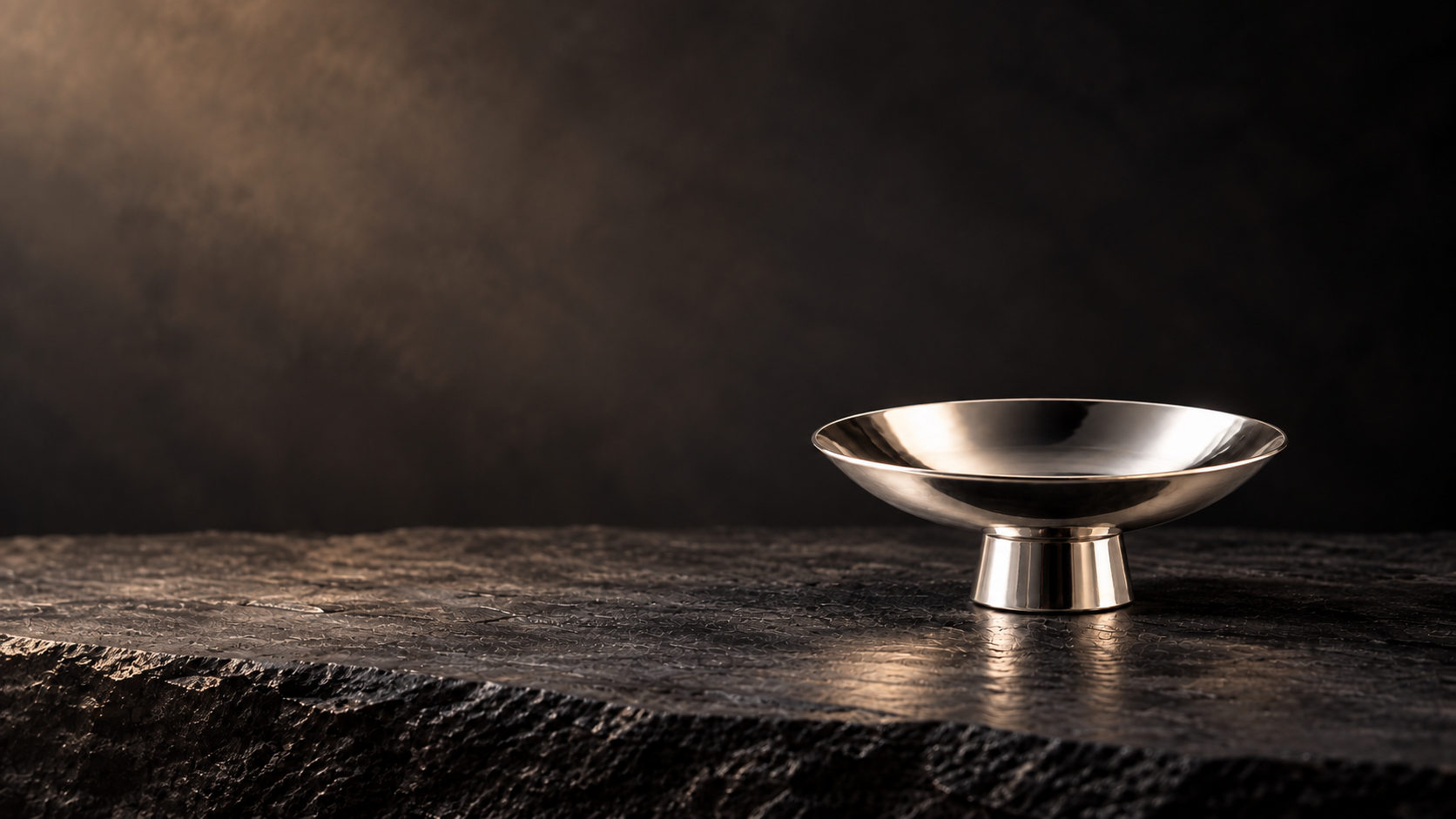
Junkodo is a silver cup shop in Takaoka, Toyama, founded in 1870. Our founder, Kato Kisuke, studied gold and silver craftsmanship in Kyoto. Today, pure silver cups are at the heart of our collection, for celebrations, commemorative gifts and everyday use. Central marks and inscriptions around the outside circumference are available by quotation.
Available in eight sizes, from 2 to 5.5 sun, in half-sun increments. The indicated diameters are approximate nominal sizes, not measurements of the actual products.
Family records say that founder Kato Kisuke began learning gold and silver craftsmanship in Kyoto in 1859 (Ansei 6). After returning to Takaoka, he founded Kato Junkodo in 1870 (Meiji 3). This tradition of silver craftsmanship has continued through generations.
A Takaoka City Museum catalogue records a commemorative pure silver cup awarded in 1921 to a census enumerator and identifies its maker as “Kato Junkodo, Takaoka.” This provides a documented glimpse into the workshop’s history.
Founder Kato Kisuke began studying gold and silver craftsmanship in Kyoto in 1859 (Ansei 6), according to family records.
After returning from his training, Kisuke founded Kato Junkodo in Takaoka in 1870 (Meiji 3). Silverware making has remained a family tradition ever since.
A Takaoka City Museum catalogue documents a commemorative pure silver cup awarded to census enumerator Tabata Yosaku and identifies its maker as Kato Junkodo of Takaoka.
Surviving marks, labels and auction records offer further traces of the Junkodo name.
Genpei-machi was once home to many textile merchants. This wider commercial history forms part of the setting in which Junkodo grew.
The muted background illustrations are decorative interpretations inspired by supplied historical imagery and family documents, not reproductions of original records.
The 1859 training date and the founding in 1870 are based on family traditions and documents. The 1921 commemorative cup is documented in a museum catalogue.
Sources: Takaoka City Museum collection catalogue, item 33 (PDF p. 5) / Cultural Heritage Online, first census materials
A practical vessel and an expression of craftsmanship. Discover silverware through Western and Japanese traditions.
Western silver tableware served practical needs while expressing wealth and prestige. In seventeenth- and eighteenth-century Europe, changing dining customs encouraged the development of silver plates and serving vessels, bringing elaborate craftsmanship to the table.
Silverware formed part of the treasured furnishings of Japanese daimyo households. Edo-period bowls, cups and sake vessels, followed by Meiji-period silver cups, unite everyday purpose with refined craftsmanship. Their ornament preserves the beauty of Japan’s tableware traditions.
A silver cup gives lasting form to a meaningful occasion. Junkodo made a commemorative cup associated with Japan’s first national census in 1921. For celebrations, awards, retirement or anniversaries, our pure silver cups carry a personal message through central marks and outer inscriptions, available by quotation.
Silver darkens mainly through reactions with sulfur-containing substances, a process called tarnishing. This is a natural change in silverware; darkening alone does not mean that a piece is damaged.
Both a bright finish and a deeper patina have their own beauty. Like the character that develops in wooden furniture, silver’s changing colour can reflect the time spent with a treasured object.
Maintain a bright finish with care suited to the piece.
Appreciate the depth and shading that develop over time.
Care depends on the finish. Strong polishing can alter engraved details or an intentionally darkened finish. Check the appropriate method for your piece before polishing.
Choose a size and quantity and order through this website. Standard cups do not include added marks or lettering.
Choose a cupWe offer central family crests or logos, and commemorative lettering around the outside circumference of the cup. Both are custom orders: request a quotation by email. Engraving is not included in the standard cart.
Discuss engravingFree domestic shipping on merchandise totals of ¥50,000 or more, including tax. Below ¥50,000, shipping is charged at cost and shown before you confirm your order.
Online checkout currently supports delivery addresses in Japan. International shipping terms have not yet been confirmed; this English edition does not establish an overseas delivery service.
Bank transfer is available when order acceptance is enabled. Credit cards become available after payment setup and verification. Check the total, delivery estimate and return terms before confirming.
Read the sales terms49 Genpei-machi, Takaoka, Toyama, Japan
Opening days vary. Please email us before visiting.
For silver cup orders and custom engraving quotations, please contact us by email.
Email: junkodo.silver@gmail.com